A TRUSTED NEUROLOGIST FOR MOVEMENT DISORDERS CARE FOR PAKISTAN
Living with Parkinson’s Disease and a Movement Disorder Is Challenging But Effective Treatment Options Are Available at Parkinson’s MD Care
- Personalized Care and Management for Every Stage of Parkinson’s Disease (PD) and Movement Disorders
- Evidence-Based, Patient-Centered Approach
- Based on Best Global Practice Standards
- Personalized Success Rate in Patient Clinical Outcomes
- Deep Brain Stimulation (DBS) Interventional Therapy
Trustindex verifies that the original source of the review is Google. I had a great experience with Dr. Jawad Bajwa. The online consultation via Google Meet was excellent and very convenient. My family members and caregivers were able to join the consultation from different locations, which was very helpful. Dr. Bajwa listened to all my concerns patiently, explained everything clearly, and provided an accurate diagnosis. He is highly knowledgeable, professional, and caring. I highly recommend Dr. Jawad Bajwa to anyone looking for expert neurological care.Posted on GoogleTrustindex verifies that the original source of the review is Google. I had an excellent experience with Dr. Bajwa. I was truly impressed by the way he communicates with his patients. He takes the time to listen carefully, explains everything clearly, and approaches each case with professionalism, patience, and genuine care. His diagnostic approach was unlike anything I had experienced before. It was thorough, thoughtful, and gave me a great deal of confidence in the treatment plan. The entire consultation was well organized, and the staff was also very professional, courteous, and helpful throughout the visit. Based on my experience, I would highly recommend Dr. Bajwa, especially for patients dealing with Parkinson's disease. His expertise, compassionate approach, and attention to detail make him an outstanding doctor. May Allah bless him and reward him for the care he provides to his patients.Posted on GoogleTrustindex verifies that the original source of the review is Google. Good informative session looking forward to to my next appointmentPosted on GoogleTrustindex verifies that the original source of the review is Google. My uncle is based in Multan and had advanced Parkinson’s disease. His medications were no longer providing consistent relief, so we started exploring options such as DBS surgery in Pakistan. We had an online consultation with Parkinson’s MD Care, where the team explained the procedure in detail and addressed all our concerns. Through virtual assessments and ongoing guidance, we gained a clear understanding of the treatment process. Following DBS surgery and subsequent programming sessions, his tremors have reduced significantly, and his walking has improved. Our family is truly grateful for the expert care, support, and guidance we received throughout this journey.Posted on GoogleTrustindex verifies that the original source of the review is Google. Assalam o alaikum My husband was diagnosed with Parkinsons a little over ten years ago. Initially, it started with some involuntary movement in his hand and over the course of a few years continued on getting worse. We tried drug therapy until there was no improvement and his symptoms had started affecting his mental health. After consultation and evaluation, we underwent DBS Surgery under the supervision Parkinson’s MD Care. The entire process—from assessment to surgery and post-operative programming—was handled with precision and care. All the doctors that we got to interact with were absolutely phenomenal, they addressed each and every one of our concerns. His symptoms have significantly reduced since DBS , and his mobility including his quality of life has improved beyond expectations. This treatment has truly given him a new level of independence and hope.Posted on GoogleTrustindex verifies that the original source of the review is Google. My name is Prof. Dr. Arshad - myself a practicing clinician for more than 30 yrs now. Let me start by sharing that my wife who is 49 yrs. old and a mother, has been very active throughout her life started having involuntary abnormal movements almost three years back; initially in neck but later progressed to lower limbs that resulted in inability to walk which later made her become wheelchair/bed bound requiring help for everything like eating, dressing, going to washroom so our life came to almost a standstill. All top notch neurologists in Pakistan saw her and the unanimous diagnosis was Tardive Dystonia- a disabling disease resistant to medical treatment. We lingered on to drug therapy for months but to no benefit causing significant physical and mental stress. Here we as a family decided to go for Deep Brain Stimulation (DBS) therapy. My wife agreed after lots of discussion and international online consultations with global experts. Our next step was to find the right doctor to get DBS procedure. Being a doctor myself; different names and practices of DBS specialists were shared by well wishers from all over the world. I reached out to few of them and among them was American Parkinson’s MD Care DBS physician and his global team. He was the one who convinced my wife and myself genuinely with empathy and concern to proceed. From there on our medical journey was as per his medical advice till today. Parkinson’s MD Care physician and his team has been a great help. He took an extra mile in managing her disease and treatment. He guided us correctly and positively before, during and even after DBS. He was there in OT during DBS procedure fine tuning DBS lead implantation and even helped through her OT journey with his positive personality. He is always available to help us, assist us and guide us that is very important and satisfying for us. I would say that due to his humane, down to earth nature and positive attitude, our journey has been very remarkable and comfortable. Regarding DBS results of Parkinson’s MD Care team, it has been very positive. One is our personal experience that my wife Tardive Dystonia improved more than 80% after DBS. There was another case with Advanced Parkinson’s disease around 55 yrs. of age who had very disabling right hand tremor limiting him to eat and drink independently or walk comfortably. He underwent DBS as well around the same time and is now able to eat and drink by himself and currently has returned to playing Golf. All in all, I would strongly recommend DBS and medical management with Parkinson’s MD Care for Parkinson’ disease, Dystonia, Tremor and other movement disorders. If anyone wants to reach out to me to get more information or reassurance about Parkinson’s MD care, I am just a call away.Posted on GoogleTrustindex verifies that the original source of the review is Google. My father’s Parkinson’s disease had reached a stage where medicines were not that effective and showing some side effects too . We were emotionally exhausted seeing him living with this disease . After consultation at Parkinson’s MD Care, DBS surgery was recommended by an American trained DBS neurologist. The entire process was clearly explained and carefully planned. After surgery and follow-ups, his tremors reduced significantly and he’s doing much better again. It honestly gave our family hope again.Posted on GoogleTrustindex verifies that the original source of the review is Google. My father lives in Lahore and his Parkinson’s symptoms were gradually getting worse despite regular medication. We first searched on Google and arranged an online consultation with the American qualified neurologist at Parkinson’s MD Care. The guidance we received was very clear and reassuring. Based on that, we decided to travel to Karachi for further evaluation. After proper Parkinson’s disease treatment and medication adjustment, we have noticed better control in his tremors and improved mobility. The whole journey from online consultation to in-person care was very smooth.Posted on GoogleTrustindex verifies that the original source of the review is Google. Living with dystonia was physically and emotionally exhausting. Muscle contractions were painful and unpredictable. I found Parkinson’s MD Care while looking for expert Dystonia Treatment in Karachi. The expert neurologist provided a comprehensive assessment and a personalized management plan. The improvement in muscle control and pain reduction has greatly enhanced my quality of life. The clinic’s professionalism and advanced expertise truly stand out.
Globally Recognized Expertise in Parkinson’s Disease, Movement Disorders and Deep Brain Stimulation
Parkinson’s disease (PD) and movement disorders can significantly impact daily life, affecting mobility, balance, coordination, and overall activities of daily living. These complex neurological conditions require precise diagnosis and expert care from a highly trained and experienced global specialist.
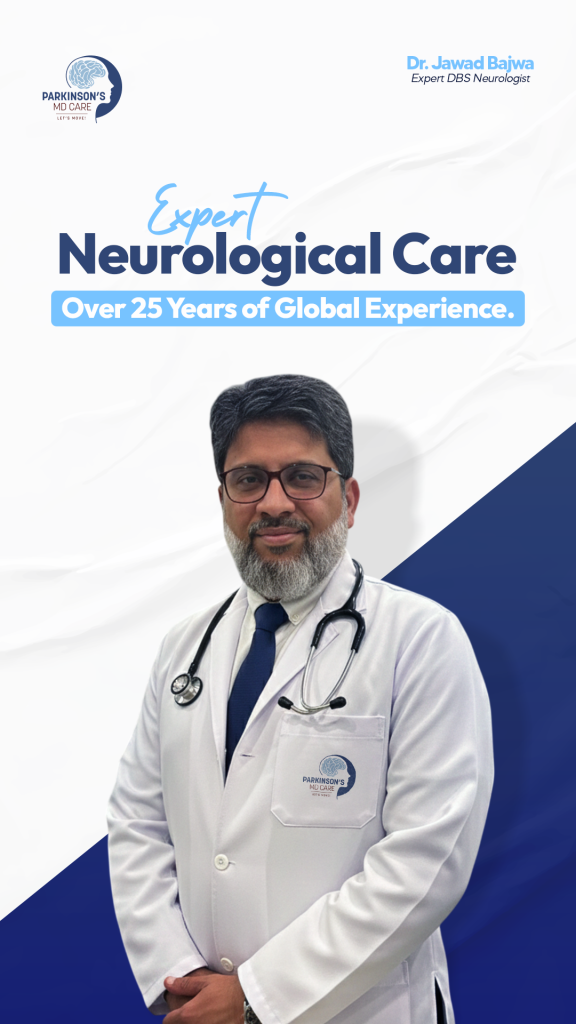
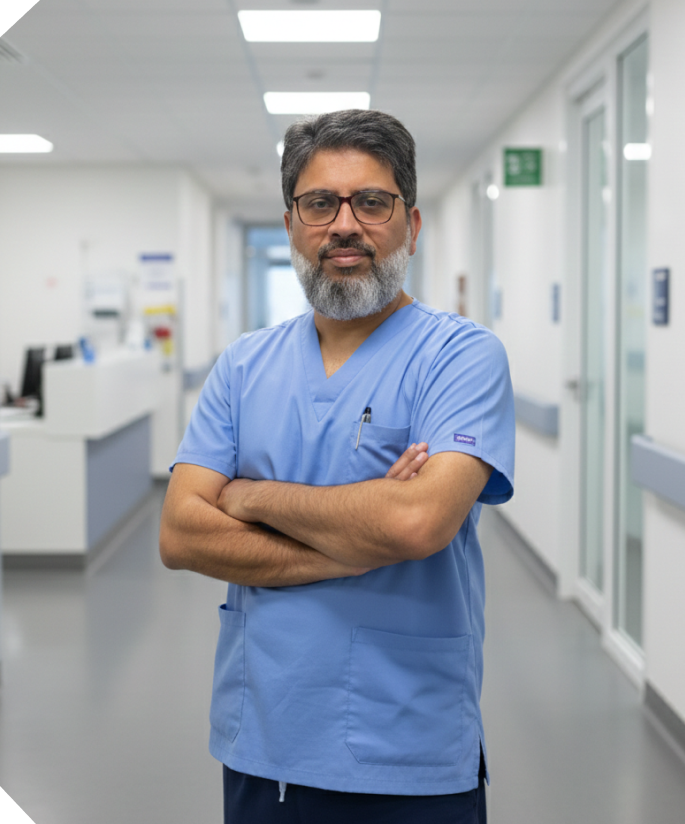
Commanding influence across the Middle East, North Africa and South Asia (MENASA) and globally, Dr. Jawad A. Bajwa brings distinguished experience as an interventional movement disorders neurologist specializing in Parkinson’s disease (PD), movement disorders and deep brain stimulation surgery. He is well recognized in the diagnosis, treatment, counseling, and comprehensive management of Parkinson’s disease (PD), tremor, dystonia, and related movement disorders.
Dr. Jawad A. Bajwa has trained at the best academic institutes in the United States, including the Georgetown University Hospital, Washington, DC and the Cleveland Clinic Foundation, Cleveland, Ohio and has practiced and collaborated with leading neurology, Parkinson’s disease (PD), movement disorders, and deep brain stimulation (DBS) centers in the USA, Europe, Asia Pacific, and the Middle East, North Africa and South Asia (MENASA) region. His international experience provides world-class standards of care in all treatments.
Globally Recognized Expertise in Parkinson’s Disease, Movement Disorders and Deep Brain Stimulation
Parkinson’s disease (PD) and movement disorders can significantly impact daily life, affecting mobility, balance, coordination, and overall activities of daily living. These complex neurological conditions require precise diagnosis and expert care from a highly trained and experienced global specialist.
Commanding influence across the Middle East, North Africa and South Asia (MENASA) and globally, Dr. Jawad A. Bajwa brings distinguished experience as an interventional movement disorders neurologist specializing in Parkinson’s disease (PD), movement disorders and deep brain stimulation surgery. He is well recognized in the diagnosis, treatment, counseling, and comprehensive management of Parkinson’s disease (PD), tremor, dystonia, and related movement disorders.
Dr. Jawad A. Bajwa has trained at the best academic institutes in the United States, including the Georgetown University Hospital, Washington, DC and the Cleveland Clinic Foundation, Cleveland, Ohio and has practiced and collaborated with leading neurology, Parkinson’s disease (PD), movement disorders, and deep brain stimulation (DBS) centers in the USA, Europe, Asia Pacific, and the Middle East, North Africa and South Asia (MENASA) region. His international experience provides world-class standards of care in all treatments.
About Dr. Jawad A. Bajwa
Dr. Bajwa’s expertise is grounded in rigorous American training and clinical practice, which he has successfully combined with extensive experience as a leader building Parkinson’s disease (PD), movement disorders and deep brain stimulation (DBS) programs, clinical services, and research in the USA and then across the MENASA (Middle East, North Africa, and South Asia) region. His clinical and academic contributions span a broad geographical scope.
With more than 25 years of experience as an interventional movement disorders and deep brain stimulation (DBS) neurologist having extensive clinical expertise, he has devoted his professional life to assisting such patients in regaining their mobility, self-assurance, and sense of control.
His unique blend of American medical education and training, global work experience, international leadership roles, and regional cultural competence has positioned him as one of the most recognized and accomplished movement disorders neurologists in the region. Dr. Bajwa has made a significant difference in clinical care, medical training, and research, making him a leading figure in improving care and research for Parkinson’s disease (PD) and movement disorders in the Middle East, North Africa, and South Asia (MENASA) region.
Our Parkinson’s and Movement Disorder Neurologist for Pakistan provides a unique, approachable method of Parkinson’s disease (PD) and movement disorders care through Parkinson’s MD Care, his Parkinson’s disease (PD) and movement disorders virtual online practice, which connects patients from different areas of the globe without being constrained by geography. His method ensures that each patient receives individualized, empathetic, and evidence-based care in the convenience of their home by combining advanced clinical expertise and virtual online remote technology, all with sincere compassion.
Badges & Certifications of Dr. Jawad A. Bajwa

King Edward
King Edward Medical University

Mount Sinai
Mount Sinai School of Medicine

Georgetown
Georgetown University Hospital in Washington, DC

Cleveland Clinic
Cleveland Clinic Foundation, Cleveland, Ohio
Disorders We Treat
Parkinson’s disease (PD) and movement disorders impact all aspects of life, not just physical capabilities. With a non-traditional, patient-first easy going approach to care, patients receive professional advice and treatment for medical disorders.
Parkinson’s MD Care offers specialized neurological and movement disorders care to patients directly through advanced assessments. Our knowledge of deep brain stimulation (DBS) and individualized treatment programs enables them to regain control, comfort, and confidence without the need for physical appointments.
Here is the list of some disorders that we specialize in treating.
Parkinson’s Disease
Parkinson’s disease (PD) is a neurological movement disorder that worsens over time and affects movement and coordination. When nerve cells in a part of the brain called the basal ganglia stop working, it causes a reduction in dopamine. This chemical messenger helps movement function smoothly and in a controlled way. When dopamine levels decrease, people may have tremors, stiffness, sluggish movement (bradykinesia), and trouble keeping their balance.
Parkinson’s disease (PD) is the fastest-growing brain neurodegenerative disorder globally. Asia, in particular, is experiencing a rapid growth in Parkinson’s disease (PD) cases due to population growth, aging, microplastics, and industrial pollution. It is most commonly associated with movement symptoms, but it can also impact other aspects of health, such as mood, sleep, memory, and olfactory perception. People over 50 are more likely to have the illness, but it can also happen in younger people. The cause is unknown, but genetics in some cases and environment in most cases are thought to play a role. With the rising number of cases, the demand for effective Parkinson’s disease treatment is increasing, focusing on symptom management, slowing disease progression, and improving patients’ overall quality of life.
Treatment of Parkinson’s Disease
- Medications to manage tremors, stiffness, and slowness.
- Holistic wellness, such as exercise routines, a balanced nutritional diet, stress management, and spirituality for better long-term control.
- Deep brain stimulation (DBS) to enhance activities of daily living, maintain physical and functional independence, and minimize drug complications.
- Other supportive lifestyle treatments.
Essential Tremor
Essential tremor (ET) is a common neurological movement disorder that causes particular body parts, usually the hands and arms, to shake or tremble without the person’s control. It can also have an effect on the face, voice, head, or other parts of the body. Essential tremor (ET) usually happens when you move or hold a certain position.
This condition can affect anyone, although it is more commonly seen in younger adults but equally happens in older adults. Essential tremor (ET) normally starts slowly and gets worse over time, which can make things like writing, eating, or getting dressed harder to do.
Treatment of Essential Tremor
- Medications to reduce shaking.
- Holistic wellness, including exercise and managing stress to minimize tremor triggers.
- Deep brain stimulation (DBS) to stabilize tremors for life changing functional improvement.
- Supportive lifestyle therapy.
Dystonia
Dystonia is a neurological movement disorder that causes the muscles to contract involuntarily, which can lead to twisting, repeated movements, or abnormal postures. These muscle contractions can affect just one portion of the body (focal dystonia), two or more parts of the body (segmental dystonia), or all over the body (generalized dystonia). The condition might be moderate, or it can be severe and painful, making it hard to do everyday things.
Dystonia affects the muscles, but it starts in the brain, more specifically in the basal ganglia, which is in charge of coordinating movement. When the brain can’t talk to the muscles properly, it sends abnormal signals that make muscles stiffen on their own.
Dystonia can occur at any age and may develop as a primary disorder (with no identifiable cause) or secondary to another neurological condition, injury, or medication. Genetic factors also play a role in some forms. Common symptoms include muscle stiffness, tremors, and abnormal postures of the neck, face, hands, or limbs. Patients seeking dystonia treatment in Pakistan can access specialized neurological care and advanced therapies aimed at managing symptoms and improving daily functioning.
Treatment of Dystonia
- Medications to reduce involuntary contractions.
- Holistic wellness to manage stress along with exercise to prevent symptom aggravation.
- Deep brain stimulation (DBS) to reduce muscle twisting and pain and improve quality of life dramatically.
- Supportive lifestyle treatment.
Not Sure What’s Causing Your Symptoms?
Use this easy checklist to look for any indicators of movement abnormalities. If you can relate to any of them, it might be time to see a movement disorders neurologist in Pakistan, who treats Parkinson’s disease (PD) and various movement disorders.
Parkinson’s Disease
- Tremor
- Slowed movement (bradykinesia)
- Rigid muscles
- Poor posture and balance
- Slowness or loss of spontaneous movements
- Speech changes
- Writing changes
- Non-motor symptoms
Essential Tremor
- Tremors in the hands and arms
- Head nodding
- Shaky voice
- Tremors in legs or trunk
-
Difficulty with daily tasks
(like writing or holding objects)
Dystonia
- Involuntary muscle contractions
- Twisting or repetitive movements
- Abnormal or fixed postures
- Pain or discomfort during movement
- Muscle cramps or stiffness
- Symptoms that worsen with stress or fatigue
Understanding the Brain:
Your Body’s Movement Command Center
The human brain is a complex network that controls every movement, thought, and emotion. For patients with movement disorders such as Parkinson’s disease (PD), Essential tremor (ET), or dystonia, understanding how the brain works helps explain why these conditions occur and how treatments are designed to help.
1. Cerebral Cortex
The largest part of the brain, divided into left and right hemispheres. It controls voluntary movements, speech, emotions, and problem-solving. The motor part of the cerebral cortex sends signals that initiate movement.
2. Cerebellum
Located at the back of the brain, the cerebellum fine-tunes movement and coordination. Disorders like tremor and dystonia are often linked to cerebellar dysfunction, causing imbalance and clumsiness.
3. Basal Ganglia
This deep brain structure plays a major role in controlling smooth and purposeful movements. In Parkinson’s disease (PD) and dystonia, the basal ganglia’s nerve cells are affected, leading to tremors, rigidity, or involuntary motions.
4. Thalamus
Acts as a relay station, passing movement and sensory information to and from the cerebral cortex. It helps maintain control and precision in motion.
5. Brainstem
Responsible for vital functions like breathing and heart rate, it also connects the brain with the spinal cord, enabling reflex actions and autonomic movements.
6. Frontal Lobe
Handles motor function, planning, and problem-solving. Damage or dysfunction here can contribute to difficulties in voluntary motion and cognitive control.
Understanding the Brain:
Your Body’s Movement Command Center
The human brain is a complex network that controls every movement, thought, and emotion. For patients with movement disorders such as Parkinson’s disease (PD), Essential tremor (ET), or dystonia, understanding how the brain works helps explain why these conditions occur and how treatments are designed to help.
Key Regions of the Brain Involved in Movement
1. Cerebral Cortex
The largest part of the brain, divided into left and right hemispheres. It controls voluntary movements, speech, emotions, and problem-solving. The motor part of the cerebral cortex sends signals that initiate movement.
2. Cerebellum
Located at the back of the brain, the cerebellum fine-tunes movement and coordination. Disorders like tremor and dystonia are often linked to cerebellar dysfunction, causing imbalance and clumsiness.
3. Basal Ganglia
This deep brain structure plays a major role in controlling smooth and purposeful movements. In Parkinson’s disease (PD) and dystonia, the basal ganglia’s nerve cells are affected, leading to tremors, rigidity, or involuntary motions.
4. Thalamus
Acts as a relay station, passing movement and sensory information to and from the cerebral cortex. It helps maintain control and precision in motion.
5. Brainstem
Responsible for vital functions like breathing and heart rate, it also connects the brain with the spinal cord, enabling reflex actions and autonomic movements.
6. Frontal Lobe
Handles motor function, planning, and problem-solving. Damage or dysfunction here can contribute to difficulties in voluntary motion and cognitive control.
How Does This Knowledge Help in Treating
Parkinson’s Disease and Movement Disorders?
Understanding the brain’s structure allows specialists like Dr. Jawad A. Bajwa to target the affected areas through therapies such as medications and deep brain stimulation (DBS), which restore communication within the motor circuits.
When Should You See
Dr. Jawad A. Bajwa?
Getting checked out early can make a big impact if you notice changes in how you move or control things. Dr. Jawad A. Bajwa is an expert in detecting and treating Parkinson’s disease and other movement disorders. He helps patients to improve their quality of life via personalized care and cutting-edge treatments.
You should consider seeing Dr. Jawad A. Bajwa if
- You have started noticing tremors, stiffness, or slowed movements in your hands, arms, or legs.
- You experience involuntary muscle contractions, repetitive movements, or abnormal postures—such as your neck twisting (cervical dystonia), eyelids closing uncontrollably (blepharospasm), or fingers curling inward (hand dystonia/writer’s cramp).
- You have a shaking or trembling of the hands, head, voice, or other body parts that interferes with daily tasks.
- Everyday activities like writing, using utensils, or walking are becoming more difficult.
- Your symptoms worsen with stress or fatigue, or you notice they improve temporarily with certain movements.
- Your current medication no longer manages your symptoms as effectively as before.
- You are experiencing side effects like motor fluctuations or uncontrolled movements (dyskinesia) from Parkinson’s (PD) treatment.
- You have noticed changes in balance, softer speech, smaller handwriting, or reduced facial expressions.
- You are exploring interventional treatment options such as deep brain stimulation (DBS) for Parkinson’s disease (PD), Essential tremor (ET), or dystonia.
- You want ongoing, personalized care to help you move better and live more comfortably.
- You or a loved one needs expert guidance and support for living well with movement disorders.
- You would like a second opinion or wish to confirm your diagnosis and treatment plan.
Why Timely Treatment Matters for Parkinson’s Disease and Movement Disorders?
Early medical care can make a big difference in how well people with mobility disorders do. Symptoms are easier to deal with, treatment works better, and patients might have a higher quality of life when they are treated early. Delaying treatment can lead to worsening symptoms and reduced independence.
| Disorder | If Treated Timely | If Not Treated Timely |
|---|---|---|
| Parkinson’s Disease | Early therapy and medications can improve mobility and quality of life and maintain daily function. | Symptoms such as stiffness, tremors, and slowness become severe, reducing independence and quality of life. |
| Essential Tremor | Tremors can be controlled with medication or DBS, helping maintain steady hands and daily activities. | Tremors worsen over time, making writing, eating, or self-care more difficult. |
| Dystonia | Early care reduces muscle spasms, improves posture, and maintains mobility. | Delay may cause fixed postures, pain, and limited movement. |
Turning Challenges into Hope
We at Parkinson’s MD Care think that every little step forward is important. We help patients regain control, confidence,
and a good quality of life by giving them compassionate care, sophisticated evidence based personalised treatments, and continuing support. We turn doubt into progress and disappointment into hope when we work together.
Where You Can Get Our Services?
Parkinson’s MD Care is a completely virtual neurological movement disorders online clinic where Dr Bajwa provides professional consultation in the comfort of your own home. Whether you are looking for a Neurologist for Karachi, Islamabad, Quetta, Peshawar, Lahore, or any city in Pakistan and the region, you can obtain consultations, detailed assessments, and treatment plans for Parkinson’s disease (PD), other movement disorders, and guidance on deep brain stimulation (DBS). No matter where you are, our online clinic guarantees that professional counsel, medical assistance, and follow-up care are accessible in a convenient, safe, and effective manner.
Frequently Asked Questions
Are Parkinson’s disease and movement disorders treatable?
Yes, Parkinson’s diseases (PD) and many movement disorders can be treated well. There is no cure, but the appropriate treatment can make symptoms far less severe, make movement easier, and make life better. Patients frequently regain autonomy and self-assurance with appropriate care and follow-up.
What treatment options are available?
Treatment varies depending on the condition but may include medications, physical and occupational therapy, and lifestyle adjustments. Deep Brain Stimulation (DBS) also offers a highly effective option to control symptoms and improve quality of life.
Is dystonia always progressive, or can it remain stable for years?
Not always, Dystonia can remain stable, when treated early and monitored closely. Regular checkups help in adjusting medical and interventional therapy and slowing progression.
Is Deep brain stimulation only for Parkinson’s disease?
No, Deep Brain Stimulation (DBS) isn’t limited to Parkinson’s disease (PD). It’s also used to treat essential tremor (ET), dystonia, and other kinds of tremors and movement disorders when limiting physical independence. Early and timely intervention with Deep Brain Stimulation (DBS) for Parkinson’s disease (PD) and other movement disorders (MDs) can dramatically control symptoms and improve quality of life.
What are the early symptoms of Parkinson’s disease?
Early signs often include tremors, slowed movement, muscle stiffness, softer speech, changes in handwriting, and reduced facial expression. Recognizing these signs early and consulting a movement disorders (MDs) neurologist can make a big difference in management.
How are movement disorders diagnosed?
Diagnosis involves a detailed clinical evaluation, including medical history, physical and patient examination, and sometimes laboratory workup and brain imaging. Dr. Bajwa takes time to understand each patient’s symptoms thoroughly before confirming a diagnosis.
At what age does Parkinson’s usually start?
It typically develops after the age of 50, though early-onset cases can appear earlier and are rising. Early recognition allows for better symptom control and improved long-term outcomes.
When should a Parkinson’s disease patient consider deep brain stimulation?
Deep Brain Stimulation (DBS) is considered primarily when activities of daily living are compromised, affecting patient independence and medication side effects are bothersome. Dr. Bajwa carefully evaluates each patient to determine whether Deep Brain Stimulation (DBS) is the right choice.
Which movement disorders does Dr. Bajwa treat?
Dr. Bajwa provides expert care for a wide range of movement disorders, including Parkinson’s disease (PD), tremor, dystonia, tics, myoclonus, ataxia, and Tourette syndrome, among others.
What is Dr. Bajwa’s experience in Parkinson’s disease care?
With over 25 years of American and global experience, Dr. Jawad A. Bajwa is recognized for his advanced interventional expertise in Parkinson’s disease (PD), movement disorders, and deep brain stimulation (DBS). His compassionate, patient-focused approach has helped thousands improve their mobility, confidence, and overall well-being.